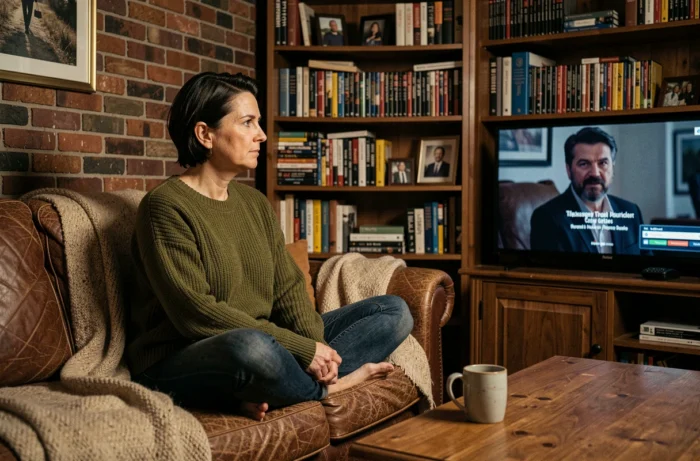
The French documentary is exporting better than ever. While international sales of French audiovisual content are experiencing a marked decline, the documentary genre is holding strong and has risen to the rank of the second most exported genre, ahead of animation, with a share nearing a quarter of the international sales market. This positioning reshuffles the cards for broadcasters as well as for viewers in search of quality documentary films and reports.
Broadcast quotas and platform obligations: what shapes the documentary offer
The French media chronology imposes investment obligations on streaming platforms for national creation. Since the transposition of the European SMA directive, on-demand services established outside France but targeting the French audience must dedicate a portion of their revenue to local audiovisual production.
HBO Max recently signed its first agreements with the French interprofessional body, including specific commitments on animation and documentary. This type of agreement mechanically expands the volume of documentaries funded and available for the French-speaking audience.
Arcom publishes its support figures for creation each year. Documentaries occupy a stable place there, supported by public channels (France Télévisions, ARTE) but also by digital players investing in immersive formats and long-form reporting. To browse a catalog dedicated to this genre, the Euromedia Television platform brings together productions covering history, politics, art, and daily life around the world.

Author documentary vs. factual reporting: two distinct grammars
Confusing documentary film and reporting is akin to confusing a novel with a newspaper article. The author documentary relies on a clear point of view, a cinematic writing process, and an editing that constructs a narrative. Reporting, on the other hand, prioritizes factuality, the field, and the words of direct witnesses.
This distinction has concrete consequences for production. A cinema documentary often benefits from CNC funding, a theatrical release, and sometimes a selection at festivals (Cannes, FIPADOC, Lussas). Television reporting follows an editorial commissioning circuit dictated by the programming schedules of the channels.
The two formats complement each other. A report from a conflict zone delivers raw images, an urgency. A documentary on the same subject can return years later, cross-reference archives, and question memory. We observe that the most avid viewers consume both without hierarchy, adapting their expectations to the format.
What the format changes in the viewer experience
The author documentary requires time. Films like those screened at Lussas regularly exceed two hours. Reporting, calibrated for television, often fits into less than an hour. The choice of format conditions the pace, depth of analysis, and degree of immersion.
Selection criteria for spotting a documentary that delivers on its promises
Rankings by viewer ratings (Allociné, SensCritique) remain useful, but they compress decades of production under the same scale. We recommend cross-referencing several filters before launching into a documentary film.
- The director’s background: a filmmaker who has already worked in the field they are filming brings knowledge that is felt in the editing and the quality of the collected testimonies.
- The funding mode: a documentary co-produced by a public channel and supported by the CNC has passed through several reading committees, filtering out some weaker projects.
- Festival selection: a screening at Lussas, FIPADOC, the Leipzig Festival, or IDFA (Amsterdam) indicates work recognized by professionals in the genre.
- The shooting duration: a documentary filmed over several months, or even years, offers a depth that three days of reporting cannot reproduce.

French documentaries for export: a changing market
Joint studies by the CNC and Unifrance confirm that documentaries are holding up better than fiction and animation in the international market. Their decline remains moderate compared to the setbacks recorded by other genres in a context of general sales contraction.
This resilience can be explained by the diversity of subjects covered. French productions encompass history and politics as well as art, fashion, and environmental issues. Foreign buyers find angles that their domestic markets do not produce, particularly on European cultural heritage or geopolitical conflicts viewed from Paris.
What this changes for the French viewer
A documentary that exports well generates additional revenue that finances new productions. The cycle is virtuous: the better the genre performs internationally, the more broadcasters invest in ambitious projects aimed at the national audience. The schedules of France 5 and ARTE benefit directly from this.
The French documentary landscape is not just a checklist of titles. It is an ecosystem where regulatory obligations, editorial choices of channels, and the vitality of festivals fuel a constant flow of films and reports. Prioritizing works selected at festivals and funded through professional circuits remains the best filter to avoid opportunistic productions and access narratives that endure over time.