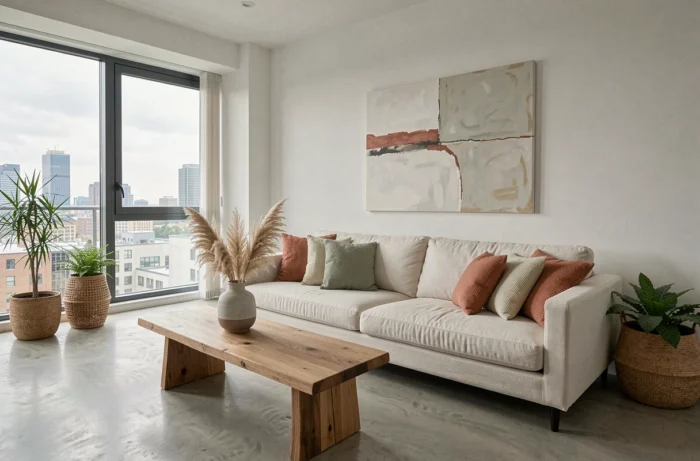
When redecorating a living room or a bedroom, the first instinct is often to look for a paint color or a sofa. The true starting point of a modern decor that lasts over time is the question of materials and their durability. Current decor trends have shifted towards concrete choices: dismountable furniture, natural fibers, modular pieces that we reconfigure instead of replacing.
Sustainable and Repairable Furniture: The Criterion That Catalogs Don’t Detail
There is a lot of talk about sustainable decor, but most articles remain vague. On the ground, the difference lies in a technical detail: a screwed piece of furniture can be repaired, a glued piece of furniture is thrown away. Before purchasing a shelf or a sideboard, check if the manufacturer offers spare parts and a disassembly guide.
This “buy once, keep for a long time” logic transforms the way we furnish a room. We prioritize a limited number of sturdy pieces rather than an accumulation of fragile items. Solid wood, brushed metal, or hand-woven rattan withstand the years better than a thin melamine panel.
To find pieces that align with this approach, one can explore decor on Easy Home France and compare the available ranges based on the materials and finishes offered.
Modularity also matters. A sofa with changeable covers and seating modules adapts to a move or a change in the living room configuration without needing to buy a new one. Feedback on this point varies by brand, but the principle remains the same: the more a piece of furniture can be disassembled and reconfigured, the more likely it is to remain useful for a long time.
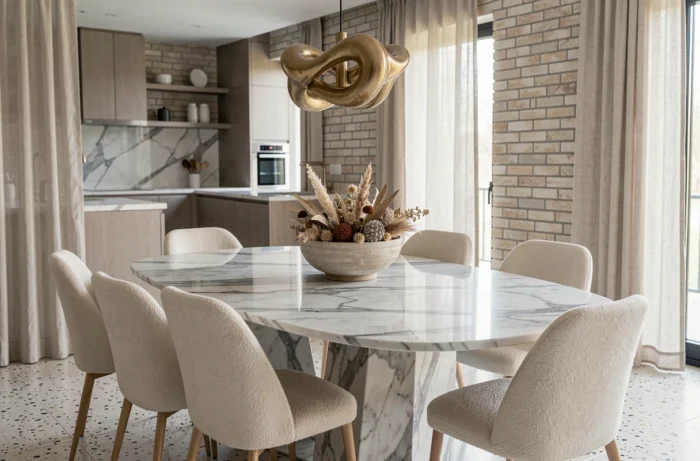
Colors and Paints for a Modern Interior: Moving Beyond All-White
All-white has dominated interior decoration for years. The current trend leans towards muted colors applied in targeted touches on one or two walls, combined with neutral shades on the rest of the room. We create contrast without saturating the space.
Choosing Paint According to the Room
In a living room, a terracotta or sage green shade on the main wall is enough to anchor the ambiance. In a bedroom, powdery tones (pale pink, blue-gray) work better because they don’t excite the eye before sleep.
For the bathroom or kitchen, the constraint is technical before being aesthetic. We choose a moisture-resistant paint, then select the color from the available range. Applying a deep green on a shower wall without proper treatment guarantees blisters in a few months.
- Living room and lounge: a bold color on one wall, the rest in neutral shades (beige, light gray, off-white)
- Bedroom: soft and matte tones to limit reflections from artificial light in the evening
- Wet rooms: prioritize the resistance of the substrate, color as a secondary criterion
- Hallway and entrance: light shades to compensate for the lack of natural light
Textiles and Wallpaper: Adding Relief Without Cluttering
A modern interior is not just about furniture and paint. Textiles (curtains, cushions, rugs) and wallpaper play a key role in bringing texture and breaking the monotony of smooth surfaces.
Panoramic or Patterned Wallpaper
Wallpaper is making a strong comeback, but not in its classic form with repetitive patterns. Large-format panoramics, applied on a single wall, create a focal point without weighing down the room. They come in botanical patterns, geometric abstracts, or color gradients.
Installation requires precision. On an irregular wall, non-woven wallpaper better hides imperfections than traditional pasted wallpaper. This technical detail avoids many disappointments during installation.
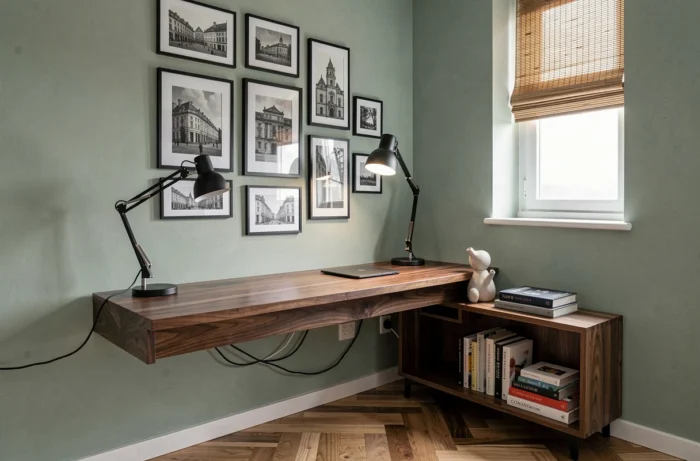
Rugs and Curtains in Natural Fibers
Linen, jute, woven cotton: these materials fit into almost all decoration styles. A jute rug in an entryway or under a coffee table adds warmth to the floor without visually overcrowding the space. Lightly wrinkled linen curtains filter light while maintaining a casual look.
Mixing two or three different textures in the same room adds depth. A boucle fabric sofa, corduroy cushions, and a knitted wool throw can coexist without competing if we stay within the same color palette.
Flooring and Coverings: Adapting Choices to the Actual Use of Each Space
The floor is often the last consideration, yet it occupies the largest visible area of a room. In modern decor, two options dominate: hardwood (solid or engineered) and large-format tiles.
- Engineered hardwood: a good compromise between wood aesthetics and durability, compatible with underfloor heating in most cases
- Large-format tiles (polished concrete or natural stone effect): easy to maintain, suitable for high-traffic areas
- High-end vinyl: an economical alternative that mimics wood or stone well, but with a shorter lifespan
The choice of flooring conditions the overall decor of a room. Light oak flooring naturally leads to furniture with clean lines and soft colors. Anthracite tiles call for more pronounced contrasts, with light furniture or metallic touches.
Practically speaking, we consider the junction between two different coverings. Transitioning from hardwood to tile between the living room and kitchen requires a door threshold or a clean junction bar. This small detail makes the difference between a polished finish and a rough look.
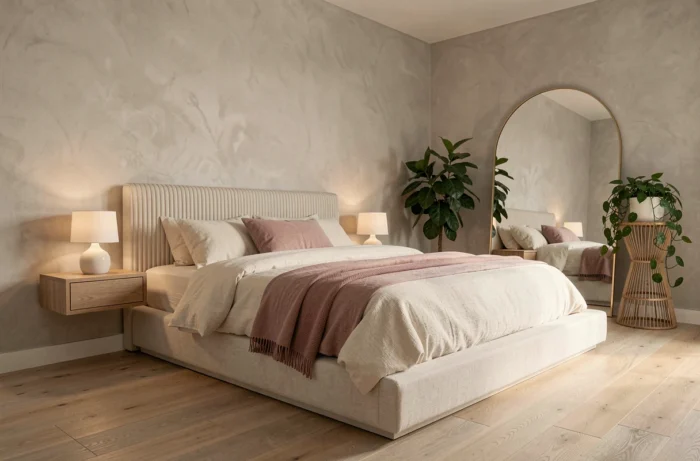
Modern decoration relies less on a fixed style and more on coherent technical choices: materials we keep, colors suited to the function of each room, textures that interact with each other. The trendiest piece of furniture at the moment will lose all its effect if placed on poorly chosen flooring or in a room where the lighting has not been considered. We save time and money by starting with the floor and walls before furnishing.