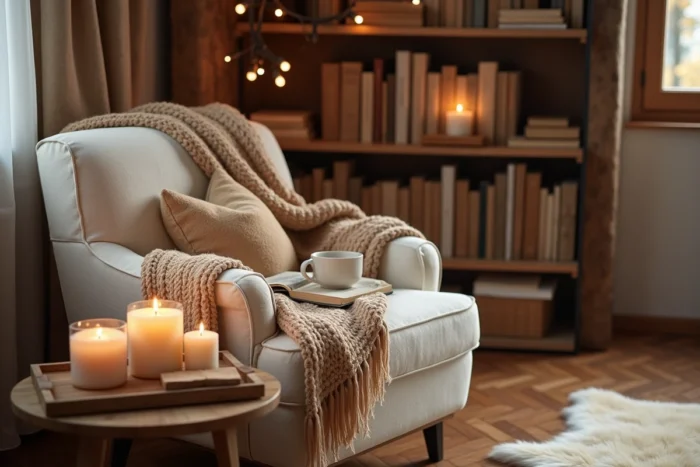
Creating a cocooning atmosphere in your home involves choosing suitable materials, colors, and lighting. Transforming your interior into a warm cocoon also requires asking a less intuitive question: how to maintain this cozy atmosphere without turning every room into a sauna as the first summer heat arrives?
Thermal comfort and cozy ambiance: the trade-offs that change the game
Competing articles talk about thick textiles and dark shades. They almost all overlook the downside of these choices: a living room saturated with velvet and opaque curtains retains heat in the summer. Recent regulatory developments support this, as summer comfort is now included in the specifications for energy renovation, and the installation of solar protections in condominiums has been simplified.
The real issue is to balance between a warm ambiance and summer thermal protection. An interior designed solely for winter becomes uncomfortable as early as June. Conversely, a room that is too minimalist loses its cocooning character.
| Decor Element | Cocoon Effect (Winter) | Thermal Impact (Summer) | Balanced Alternative |
|---|---|---|---|
| Thick velvet curtains | Strong (insulation, muted ambiance) | Negative (retains heat, blocks ventilation) | Double curtain: linen sheer + removable blackout panel |
| Large wool rug | Strong (comfort underfoot, acoustics) | Moderate (stores heat on the floor) | Natural fiber rugs (jute, sisal) replaced seasonally |
| Dark-colored walls | Strong (enveloping, depth) | Negative (absorbs radiation) | Dark accent wall on the north side, light shades on the south side |
| Low-intensity indirect lighting | Strong (soft light, visual warmth) | Neutral | Low-consumption LED string lights, table lamps |
This table shows that every decorative choice has a measurable thermal cost in summer. The “balanced alternative” column suggests compromises that preserve the atmosphere without causing overheating. Several recent renovation projects also incorporate exterior solar protections (projecting shutters, adjustable sunshades) compatible with well-designed interior decor.
Practical resources exist to delve deeper into these trade-offs, such as Monsieur Bricoleur’s home page, which details concrete solutions for interior design.
Natural materials and sustainable decor: wood, linen, and terracotta in the service of the cocoon
The current trend leans towards materials that are both warm and sustainable. Wood, linen, rattan, terracotta, ceramics, and travertine are making a strong comeback in interiors, driven by a “buy less but better” philosophy. This decorative sobriety is not a deprivation: it refocuses the ambiance on authentic textures rather than the accumulation of objects.
Linen and rattan: visual warmth without overheating
Linen has a thermoregulating property that polyester does not offer. Linen cushions, throws, and curtains provide tactile softness while remaining pleasant to the touch in warm weather. Rattan, used for lighting or seating, diffuses filtered light that enhances the cocoon effect without weighing down the room.
A sustainable cocooning interior relies on breathable materials. This is the difference between a living room that suffocates in July and a warm space all year round.
Terracotta and raw wood: thermal mass and character
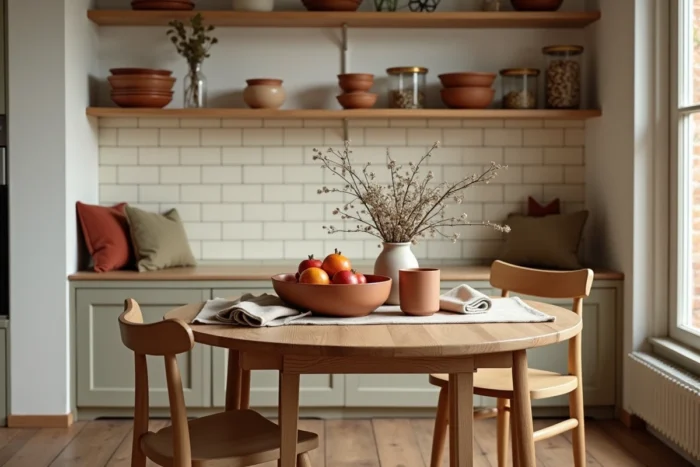
Terracotta flooring absorbs the coolness of the night and releases it during the day. This material also brings a palette of warm colors (ochre, terracotta, rosy brown) that contributes to the ambiance without resorting to dark paint. Raw wood, on the other hand, works better as furniture or partial wall cladding than as a full floor covering, as it can dry and warp due to temperature variations.
Natural light and ambient lighting in a warm living room
Light remains the most underestimated lever for creating a cocoon. Most guides recommend multiplying light sources without specifying how to manage the balance between natural light and solar heat.
- Orienting south-facing openings with an exterior shade or solar film allows you to maintain brightness in winter while blocking direct radiation in summer, preserving the bright ambiance without turning the living room into a greenhouse.
- Favoring indirect lighting (table lamps, LED strips behind furniture) rather than a central ceiling fixture creates soft shadow zones that enhance the enveloping feeling characteristic of cocooning.
- Choosing bulbs with a warm color temperature (around 2,700 K) radically changes the perception of a space, even with light walls and understated furniture.
Low-intensity indirect lighting transforms any room into a cocoon, including hybrid spaces like a hallway converted into a reading nook or a covered terrace.
Hybrid rooms and cocoon corners beyond the living room
The cocooning approach is no longer limited to the living room. Children’s bedrooms, terraces, and even small hallways are becoming personalized relaxation zones. A hallway transformed into a plant corner with some hanging plants, a wooden bench, and soft lighting creates a decompression area between the entrance and the living spaces.
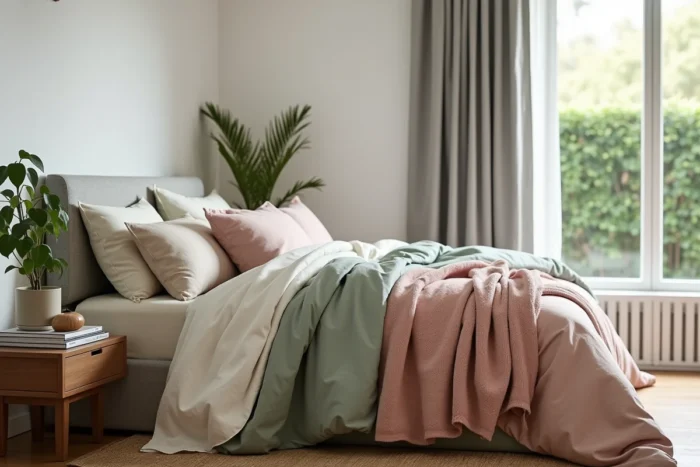
The bedroom gains warmth with layered textiles and a muted accent wall. A wrinkled linen bedspread, two mismatched cushions in natural materials, and an adjustable reading lamp are enough to transform a functional space into a true refuge.
- Terrace: an outdoor rug made of woven fibers, solar lanterns, and moisture-resistant cushions extend the cocoon ambiance outdoors without excessive maintenance constraints.
- Hallway or entrance: a small bench, a mirror, and a wooden wall hook create a mini-welcoming space that sets the tone as soon as you cross the threshold.
- Children’s bedroom: fairy lights, a tipi or a light cotton canopy, and storage in woven baskets provide a reassuring and warm atmosphere.
The warm cocoon in a sustainable version is built on materials that regulate temperature, lighting designed by zones, and modular arrangements according to the seasons. An interior that breathes in summer remains the best cocoon in winter.