After the harvest, a batch of cereals contains much more than just grains: stones, straw, weed seeds, broken or discolored grains. Leaving these elements in the harvest means accepting discounts upon delivery, lot rejections, or rapid degradation during storage. The grain separator sorter intervenes at this stage to transform a raw flow into a homogeneous, calibrated, and marketable product.
Optical sorting and high-resolution cameras: the game-changing technology
Typical content on cereal sorting describes grids, sieves, and air flows. These mechanical principles remain the foundation, but a recent technological layer is revolutionizing sorting accuracy.
Modern color sorters are equipped with high-resolution CCD or CMOS cameras that analyze each grain individually in real-time. Color, shape, surface defects: everything is scanned. When a grain does not meet the defined criteria, a micro-jet of compressed air ejects it from the flow in a fraction of a second.
Some models add near-infrared or even hyperspectral sensors. These sensors detect anomalies invisible to the eye, such as the onset of fungal contamination or a difference in internal composition. This way, a batch can be certified compliant with the requirements of export buyers, mills, or breweries, which sometimes demand lots with zero discolored grains or zero foreign bodies.
To delve deeper into the functioning and concrete benefits of this stage, the dedicated page on the grain separator sorter on Agri Systems details the different separation principles and their applications by crop type.
What the grain separator sorter effectively eliminates
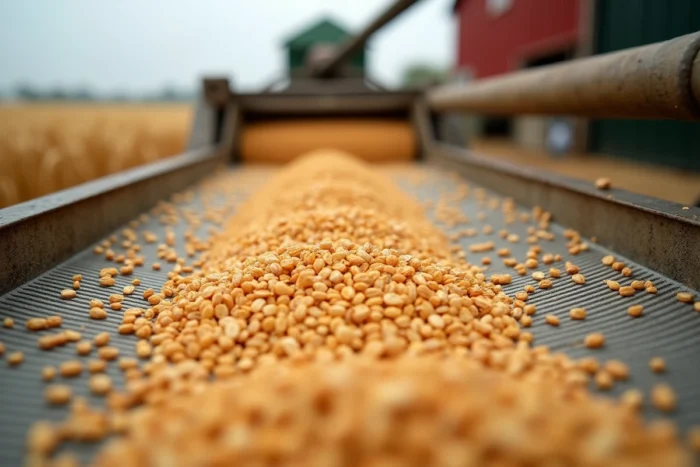
Have you ever opened a hopper after harvest to find small stones mixed with the wheat? This is a classic case. Mechanical sorting by sieving first separates elements by size: particles that are too large or too small are removed, leaving only the grains within the desired caliber range.
But size is not everything. A broken grain can have the same diameter as a healthy grain. This is where other separation principles come into play, such as density or shape.
The three levels of cleaning
- Size separation (sieves and grids): removes stones, clumps of soil, large plant debris, and weed seeds smaller than the sorted cereal.
- Density separation (density table or air flow): isolates light, scalded, or hollow grains that float in the air current while heavier, full grains remain on the table.
- Shape separation (cellular sorter): a cylinder lined with calibrated cells retains round grains and allows long grains to pass, or vice versa. This step is particularly useful for removing wild oats from a batch of wheat.
Each level removes a category of impurities that the previous one could not handle. A single mechanical pass is almost never sufficient to achieve the quality required by storage organizations or processors.
Preparing farm seeds with a sorter
Sorting is not only for delivering a clean batch to the cooperative. For farms that reseed part of their harvest, the grain separator becomes a selection tool.
The goal is simple: to keep only the heaviest, best-formed, and healthiest grains for the next sowing. A full, heavy grain has a better germination capacity than a scalded or broken grain. Sorting farm seeds reduces the seeding rate needed because the emergence rate increases.
In organic farming, this practice makes even more sense. Without chemical treatment of seeds, the physical quality of the grain becomes the primary lever for health protection. Removing grains carrying sclerotia (those small black bodies produced by ergot) or fungal spores limits the spread of diseases to the next field.
Sclerotia and ergot: a concrete health risk
Rye ergot, which also affects soft wheat, produces sclerotia mixed with grains after harvest. A cleaner-separator eliminates some of these sclerotia due to the size and density difference with healthy grains. This cleaning reduces the concentration of toxic alkaloids in batches intended for human or animal consumption.
Individual investment or collective sorting in CUMA
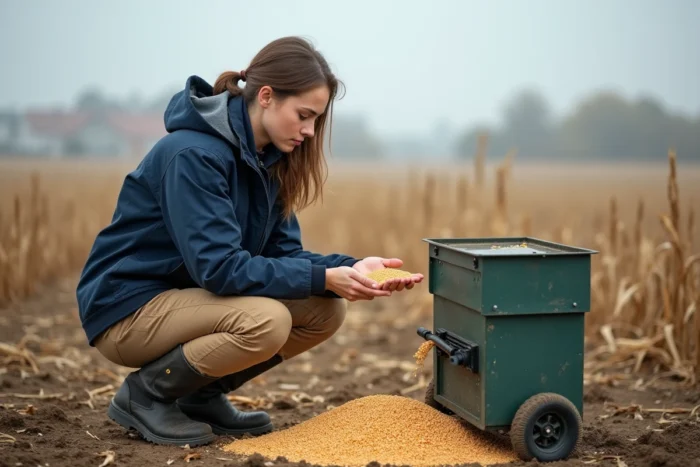
Buying a grain separator represents a significant investment. For a medium-sized farm, the question arises: should one equip alone or pool resources?
CUMA (cooperatives for the use of agricultural equipment) offer shared sorting chains. This principle works well for farms that sort once or twice a year, after the harvest. The cost per ton sorted decreases significantly when several members share the same machine.
However, collective sorting imposes scheduling constraints. After the harvest, everyone wants to sort at the same time. The waiting lines extend the time between harvest and storage, which can degrade grain quality if temperature and humidity conditions are not controlled.
An individual sorter offers immediate responsiveness: the grain goes from the field to sorting in one day. For farms that practice on-farm storage or sell through short circuits, this speed makes a difference in final quality.
The choice depends on the annual volume to be processed, the number of different crops (each crop change requires an adjustment), and the storage capacity available on the farm.
The grain separator sorter is not a comfort accessory. It is a technical link that determines the market value of the harvest, the sanitary quality of the batches, and the performance of farm seeds. Whether opting for classic mechanical equipment or a state-of-the-art optical sorter, the sorting step transforms a raw product into a valued product, batch by batch.