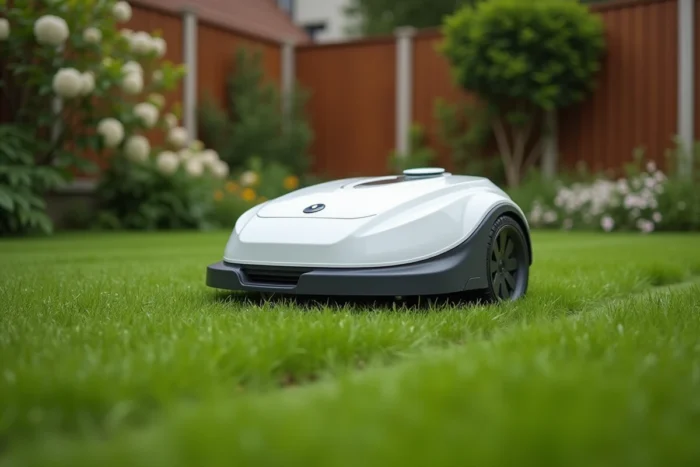
Your neighbor has a Kress robotic mower and their lawn looks immaculate. You’re considering the same purchase, but some online research quickly dampens your enthusiasm. Between the glowing reviews and the frankly negative feedback, the picture is mixed. Before pulling out your credit card, it’s better to know precisely where the reported friction points are for those who live with this robot daily.
Electronic Failures of Kress Robots: The Problem That Product Sheets Don’t Show
The most documented issue by users is not related to mowing or noise. It concerns the onboard electronics. In several French-speaking Facebook groups, Kress robot owners describe a recurring scenario: the robot returns to its base and then shuts down for no apparent reason.
Replacing the motherboard does not always solve the problem. Some users have had this part replaced, sometimes multiple times, without lasting results. In discussions among enthusiasts, one explanation often comes up: when a board repeatedly fails, the motor it controls likely has a mechanical defect (jamming, overheating). Therefore, the problem is not solely software-related.
For several seasons now, these board and motor failures have become a recurring topic in Kress user communities. If you read the issues and reviews on Kress robots reported online, this type of failure occurs much more frequently than simple adjustment issues.
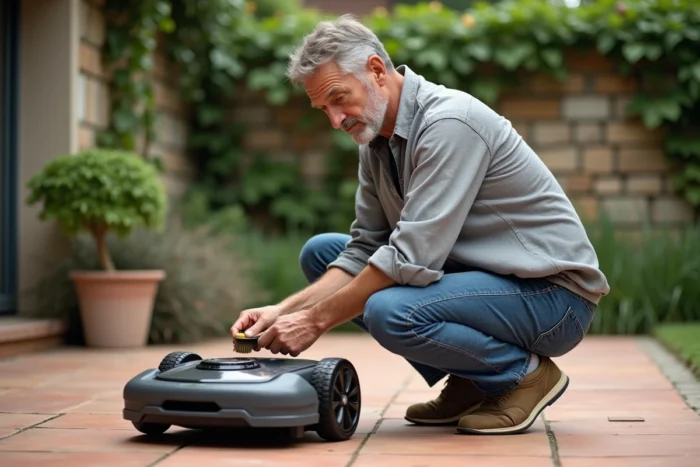
RTK Signal and Navigation: When the Kress Robot Stops Mid-Work
Have you ever noticed that a regular GPS sometimes loses signal under trees? Kress robotic mowers that use RTK technology (precision satellite positioning) encounter a similar problem, but with more inconvenient consequences.
A user of the KR171E model clearly describes the situation on Trustpilot: constant loss of RTK signal, forcing them to stay next to the robot while waiting for it to regain signal. Without a signal, the robot simply stops. It does not automatically restart searching every few minutes, which would be logical.
The peripheral cable laid on the ground to guide the return to the station also poses a problem. Several owners report that the robot does not properly follow this wire, preventing it from returning to its base on its own. The concrete result: instead of saving time, you spend your weekends monitoring the machine.
Sloped Terrain and Wet Areas
Navigation becomes even more precarious on uneven terrain. Feedback mentions a robot that easily gets stuck as soon as the ground is a bit loose. Two-wheel drive models seem particularly susceptible to this problem. 4×4 (AWD) versions exist in the Kress range, but they come at a significantly higher price.
Kress App and Settings: An Autonomy That Remains Theoretical
On paper, the mobile app allows you to control mowing, define zones, and adjust schedules. In practice, user feedback tells a different story.
A buyer of the KR261E model summarizes their frustration: despite the app, the robot regularly takes the edges, which forces frequent blade changes. The seller refers to the app for fine-tuning settings. During the warranty period, this lack of support is understandably annoying.
Why this gap between the promise and the experience? Several factors accumulate:
- The virtual exclusion zones are not always respected by the robot, leading to passes over edges and flowerbeds
- The initial mapping of the garden requires several adjustment sessions that the dealer does not always cover
- Fine-tuning remains the user’s responsibility, even when the installation has been done by a professional
The word that appears most in negative reviews is not “failure” or “noise,” but “slave.” Several owners use this term to describe their relationship with the machine: instead of being relieved, they spend time correcting, restarting, and monitoring.
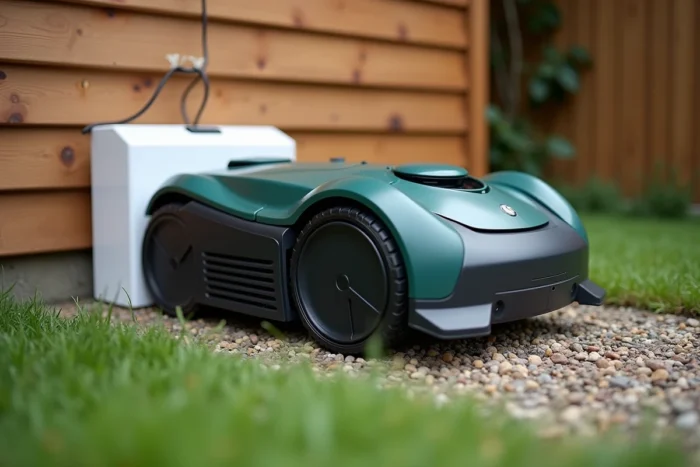
Kress Warranty and Customer Service: What Users Observe in the Field
Kress has a warranty policy that covers defects in materials and workmanship. The brand commits, through its network of authorized distributors, to repair or replace any defective part during the coverage period. Proof of purchase is required, and the warranty only applies to the original buyer.
In theory, this is reassuring. In practice, testimonies point out two flaws.
The first concerns the blurry line between adjustment and failure. When a robot takes the edges or loses the RTK signal, the dealer often considers it a configuration issue, not a defect covered by the warranty. The user finds themselves alone with a device they do not master.
The second touches on the sustainability of the network. Discussions on Reddit in English mention concerns about the financial stability of the brand and the continuity of long-term technical support. For a purchase that represents a significant investment, this uncertainty deserves consideration.
Points to Check Before Signing
- Request in writing what exactly your dealer’s warranty covers, beyond the manufacturer’s warranty
- Check if installation and initial settings are included in the price or charged additionally
- Inquire about the local availability of spare parts, especially electronic boards and blades
- Identify a Kress customer service technician in your geographical area before the purchase, not after the first failure
Kress robotic mowers offer advanced navigation technologies and peripheral wireless mowing on certain models. For simple, flat gardens, with a responsive dealer nearby, the experience can be satisfactory. But field feedback shows that electronic reliability and customer service support remain the two weak links of this brand. It’s better to invest time in verifying these two points before signing the order form.