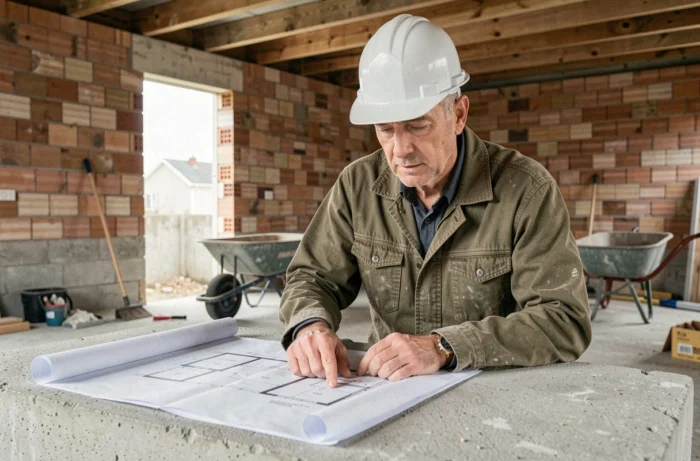
Before laying the first stone or tearing down a wall, a construction or home renovation project hinges on decisions made well ahead of the site work. The choice of materials, compliance with regulations, and verification of your craftsmen’s status directly influence the final budget and the quality of the outcome. This article details the technical points that most guides overlook.
Asbestos detection and diagnostics before renovation work
You may have noticed that some renovation projects come to a halt after just a few days? The cause is often a missing diagnosis. For any building constructed before July 1997, asbestos detection is mandatory before any work that could affect materials likely to contain it. Drilling a wall, sanding an old floor, or working on plumbing is enough to trigger this obligation.
Failure to comply with this rule exposes you to a fine, but more importantly, to a real health risk for the occupants and the professionals on site. The detection must be entrusted to a certified diagnostician, not to the company carrying out the work.
This diagnosis is not the only one to anticipate. Humidity in a basement or cellar, for example, can have very different causes: lateral infiltration, rising damp, poor ventilation, or insufficient drainage. Each cause calls for a distinct technical solution. Applying a simple waterproof coating on a wall suffering from rising damp will not solve anything. Having a precise humidity diagnosis done before choosing a method avoids paying twice.
To compare solutions and find professionals suited to your project, you can visit the Absolutis website, which lists various resources related to home improvement.

RGE status of craftsmen: a verification before signing the quote
Why does this point deserve your attention from the start of the project? Because the RGE status determines access to energy renovation aids. Qualitel reminds us that insulation work must be carried out by a professional with an RGE quality mark to qualify for financial assistance.
The verification must take place before signing the quote. Not after the start of the work. A mistake at this stage can represent several thousand euros in lost aid, with no recourse possible.
How to concretely verify the RGE status
The official France Rénov’ directory allows you to search for a craftsman by postal code and type of work. Check the validity date of the certificate: the RGE qualification is renewed periodically, and an expired certificate does not entitle you to any aid.
Also, ask the company for a copy of its current ten-year insurance certificate. These two documents, RGE and ten-year, form the minimal security foundation for your renovation project.
Construction or renovation budget: underestimated items
The majority of budget overruns do not come from the price of materials or labor. They arise from items forgotten during the initial estimate.
- Administrative procedures: a building permit or a prior declaration of work generates architect fees if the surface exceeds a certain threshold, plus processing delays that push back the project schedule.
- Soil study: in new construction, it determines the type of foundation. Discovering clay soil after excavation multiplies structural costs.
- Network reconnections: electrical connections, water drainage, bringing the panel up to standard. These items rarely appear in the first overall quote.
- Temporary relocation costs: if the housing is uninhabitable during the work, the cost of temporary accommodation weighs on the total budget.
Planning a safety margin on the total budget is the most useful and least followed recommendation. This margin absorbs unforeseen events without blocking the project.
Order of work on a home renovation site
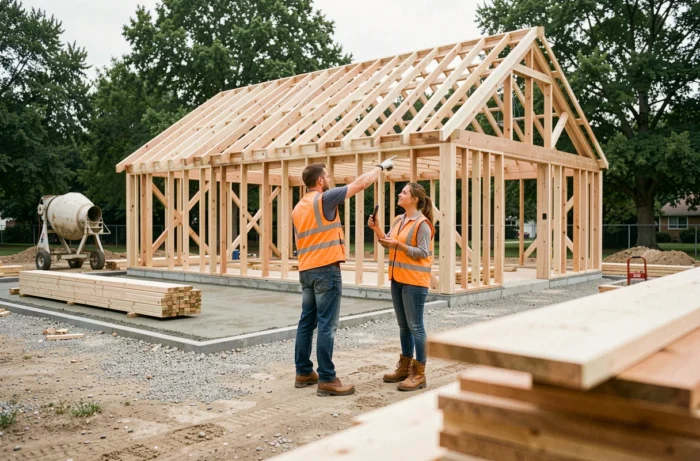
Renovating a house is not just about choosing finishes and then applying them. The order of intervention determines the final quality. A beautiful coating applied before waterproofing will crack within months.
The logical sequence to follow
The structural work comes first: structure, roofing, load-bearing walls. Then come the waterproofing and insulation work, followed by the networks (electricity, plumbing, ventilation). Ventilation must be integrated from the insulation phase, not added later. A well-insulated but poorly ventilated home accumulates humidity and degrades indoor air quality.
Finishes (floor coverings, painting, interior woodwork) come last. This sequencing avoids rework and protects each step from subsequent interventions.
Coordinating multiple craftsmen on the same site
When the project involves an electrician, a plumber, a mason, and a carpenter, coordination becomes a full-time job. An architect or project manager manages this schedule for you. Without coordination, each trade intervenes according to its own availability, creating downtime and scheduling conflicts.
- Request a written provisional schedule, with the intervention dates of each company.
- Plan regular follow-up points, at least at each phase change (structural work, finishing work, finishes).
- Require a work completion report at the end of the project, listing any reservations.
Building or renovating your home remains a technical project where decisions made before the first hammer blow weigh more heavily than those made during the work. Asbestos detection, verification of RGE status, realistic budget estimation, and adherence to the order of work are four concrete locks. Neglecting them always costs more than addressing them in advance.