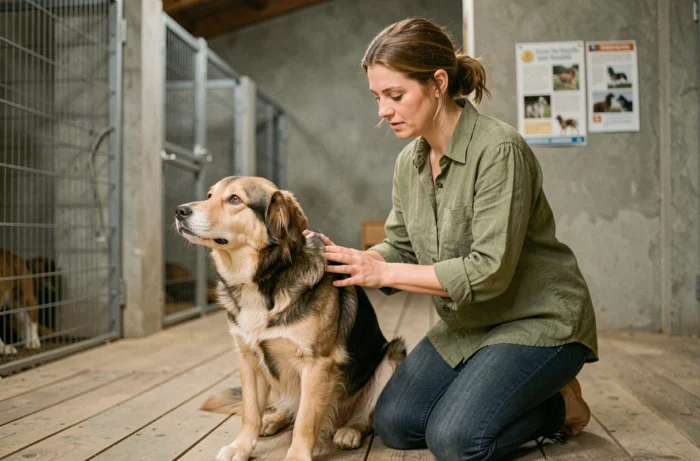
In 2025, nearly 391,000 dogs and cats were taken in by 880 shelters in France, according to a national study published by the SPA and the Affinity Foundation. At the same time, over 84,000 animals were turned away due to lack of space. These figures raise a direct question: what are we really measuring when we talk about adoption and animal welfare in France?
Shelter Capacity and Refused Animals: 2025 Data
The gap between the number of animals taken in and those that could not be accommodated provides a numerical insight into the saturation of French shelters. The table below summarizes the available data.
| Indicator | 2025 Data |
|---|---|
| Structures that participated in the study | 880 |
| Animals taken in (dogs and cats) | 391,000 |
| Animals refused due to lack of space | Over 84,000 |
| Percentage of cats among the animals taken in | 72% |
| Percentage of kittens under 6 months among the cats taken in | About half |
The saturation is linked to a combination of factors: lack of facilities, insufficient volunteers, limited veterinary resources, and inadequate public support. These constraints are not new, but their scale is growing faster than the capacity to accommodate.
For potential adopters, the listings available on animagora.fr allow them to view profiles of animals waiting in different shelters, which broadens the search beyond the local shelter.

Profile of Cats in Shelters: Why Sterilization Changes Everything
Cats represent 72% of the animals taken in in 2025. This imbalance is not due to a lack of interest from cat owners, but to a structural problem: feline straying and lack of sterilization.
About half of the cats taken in were kittens under six months old. In other words, a large portion of the entries into shelters results from unwanted litters born from unsterilized cats living in semi-freedom or total straying.
Sterilization and Commitment Certificate
Since October 1, 2022, anyone acquiring a pet must sign a commitment and knowledge certificate, made mandatory by the law of November 30, 2021. This document aims to raise awareness of the animal’s needs and limit impulsive acquisitions.
Sterilization remains the most effective lever to reduce the flow of entries into shelters. An unsterilized cat can produce several litters per year, each averaging four to six kittens. Without intervention, the progression is exponential.
- Sterilizing a female cat generally costs more than sterilizing a male, which deters some owners with modest incomes
- Subsidized sterilization campaigns by local authorities remain unevenly distributed across the territory
- Microchipping, mandatory for cats, facilitates the return of lost animals but does not prevent uncontrolled births
Dog Adoption: The Gap Between Available Profiles and Adopter Expectations
The dogs taken in in 2025 were mostly adults, with a overrepresentation of mastiffs and Malinois. These profiles present specific challenges for adoption.
A mastiff-type dog may be subject to regulatory constraints (categorization, declaration at the town hall, specific civil liability insurance). A Malinois, a breed with high energy expenditure, requires an adapted living environment and rigorous training. These requirements reduce the pool of potential adopters.
Annual Cost and Long-term Commitment
The SPA estimates that a dog costs an average of 700 euros per year for its basic needs (food and veterinary care). For a cat, this budget drops to about 500 euros per year. These amounts do not include expenses related to accessories, boarding fees, or unexpected medical care.
Adopting an adult large dog also involves housing constraints. An apartment without outdoor access is rarely suitable for a Malinois or an American Staffordshire. In contrast, an adult cat adapts more easily to a smaller space, which partly explains the difference in waiting times in shelters between the two species.
Animal Welfare After Adoption: What the 3-3-3 Rule Covers
The 3-3-3 rule, widely used by animal behavior professionals, breaks down post-adoption adaptation into three distinct phases.
- The first 3 days: decompression phase, the animal may refuse to eat, hide, or seem apathetic. This behavior is normal and should not be alarming
- The first 3 weeks: gradual establishment of spatial and relational markers. The animal begins to explore, tests boundaries, and shows its true temperament
- The first 3 months: lasting attachment to the home. The animal feels safe and fully expresses its personality
This framework is not an absolute rule. Each animal progresses at its own pace depending on its age, past, and the stability of its new environment. A dog that has experienced multiple placements will likely take more than three months to stabilize.
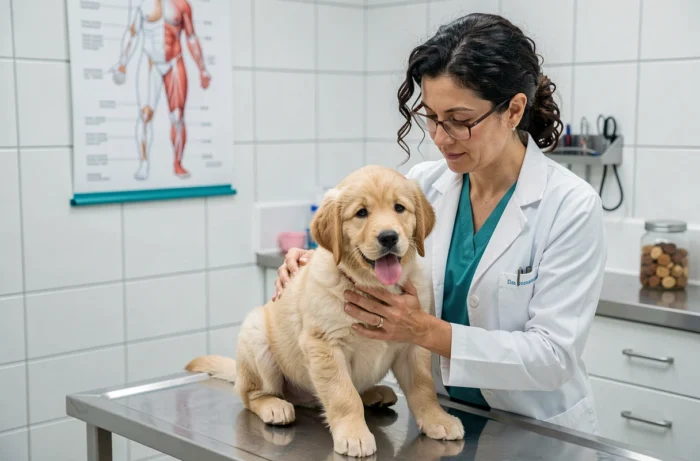
Veterinary follow-up in the weeks following adoption remains an underestimated point. A complete health check can detect latent pathologies (internal parasites, dental issues, joint disorders in large dogs) and adjust the vaccination protocol.
The issue of animal adoption in France is not a lack of goodwill from adopters, but a structural imbalance between entries into shelters and exits. As long as feline sterilization is not widespread and the profiles of available dogs remain distant from the expectations of the majority, shelters will continue to operate beyond their capacity.
Responsible adoption begins well before the visit to the shelter: it starts with understanding these numerical realities.