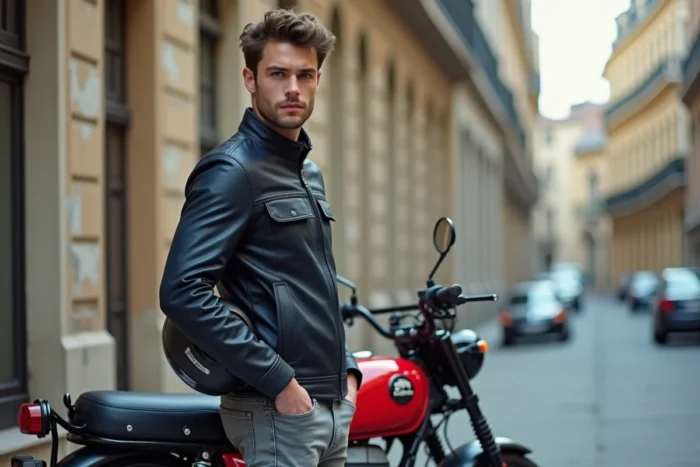
You have just obtained your car license and are already eyeing a 125 motorcycle for your daily commutes. Before you dive in, French regulations impose specific conditions based on your age, the length of time you have held your license, and the type of vehicle in question. Here’s what you need to remember to ride a 125 cm³ without risking a fine.
Electric 125 Motorcycle: The Same Rules Apply
Many future riders think that an electric motorcycle escapes the obligations of a standard license. This is false. For a 125 equivalent electric motorcycle (power less than or equal to 11 kW), the regulations are based on power and administrative category (L3e-A1), not on engine displacement.
In practical terms, whether you choose a thermal or electric model, you must hold either an A1 license or a B license supplemented by a 7-hour training course. There is no exemption for zero-emission vehicles.
This point deserves to be made from the outset, as the electric 125 segment is progressing rapidly and confusion is common in dealerships. To understand the license required to ride a 125, you need to start from this logic of power rather than engine displacement.
B License and 7-Hour Training: Conditions for Accessing a 125 Motorcycle
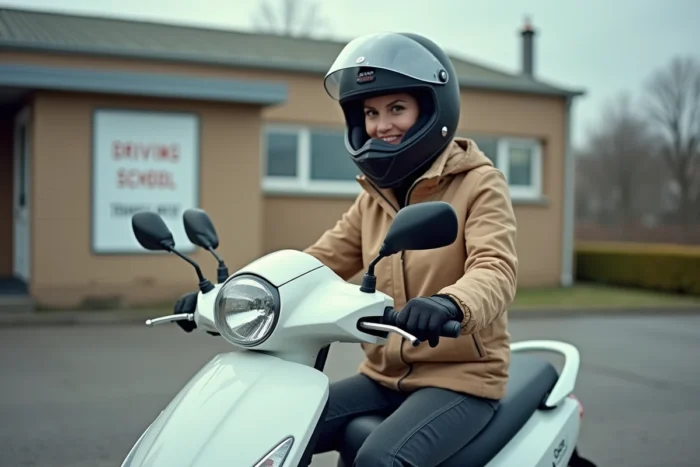
The most common case in France is that of a B license holder who wants to ride a 125. Two cumulative conditions are required:
- Hold the B license for at least 2 years, without interruption (a canceled license that is then retaken resets the clock).
- Have completed a 7-hour practical training at an accredited driving school, which combines theory and exercises on a closed course followed by on-road practice.
You can start this training in the month leading up to the anniversary of the two years of your B license. For example, if your license was issued on August 15, 2024, the training can begin from July 15, 2026.
Exemptions from Training
Some riders do not need to complete these 7 hours. If you obtained your B license before March 1980, you automatically qualify for an A1 license equivalency. Training is not required.
Another situation: if you have ridden a light motorcycle or a three-wheeled scooter of category L5e between 2006 and 2010, while holding the B license for at least two years at that time, you are also exempt.
On the other hand, holders of a B license issued by another European country must complete the training, even if they meet the seniority requirement.
A1 License from 16 Years Old: The Other Access Route
Do you not yet have a car license, or are you 16 years old and want to ride a 125? The A1 license is the dedicated route. It allows you to ride light motorcycles with an engine displacement not exceeding 125 cm³ and a power of less than or equal to 11 kW.
Obtaining the A1 license involves two classic steps:
- A theoretical test (the motorcycle code, distinct from the car code since the reform).
- A practical test consisting of exercises off-road (closed course) followed by a route in real traffic.
This license is accessible from the age of 16, making it the first legal access to riding on open roads. For a teenager, it often serves as a stepping stone before obtaining the A2 license at 18.
Content of the 7-Hour Training: What Happens in Practice
The 7-hour training is not an exam. There are no grades or possibility of failure. It is a mandatory educational module, structured into three distinct phases.
The first two hours are dedicated to theory. The instructor covers the specifics of riding two-wheeled vehicles: blind spots, emergency braking, positioning on the road, safety equipment. This part takes place in a classroom or workshop.
The next two hours are spent on a closed course, off-road. You learn to handle the motorcycle at low speeds, to brake, and to weave through cones. The goal is to master balance and focus before hitting the road.
The last three hours take place in real traffic. The instructor guides you via a radio system, similar to that used for the standard motorcycle license. You ride in normal traffic conditions.
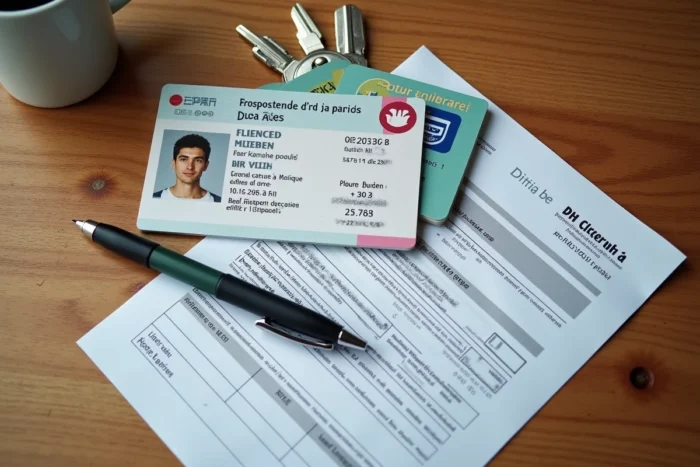
At the end of the training, the driving school provides you with a certificate. Since 2024, this certificate is gradually integrated into the digital driving title via ANTS online services, simplifying roadside checks and reducing reliance on paper documents.
Technical Inspection and the 125 Segment: A Regulatory Advantage to Know
Since April 2024, technical inspection has become mandatory for motorcycles and scooters over 125 cm³. Vehicles in the 125 segment remain below this threshold and are not subject to this obligation.
This is not a trivial detail. For a rider who is torn between a 125 and a larger displacement model, this absence of technical inspection represents one less administrative burden. It partly explains the renewed appeal of the 125 segment in France.
This does not exempt you from properly maintaining your vehicle, of course. Tires, brakes, lighting: the responsibility remains with the rider, and law enforcement can still issue fines for a vehicle in poor condition during a roadside check.
The choice between an A1 license, a B license with 7-hour training, or waiting for the A2 license depends on your personal situation, age, and training budget. The legal framework leaves no gray area: without the correct title or certificate, riding a 125 exposes you to a fine and vehicle impoundment.